
Content Strategy
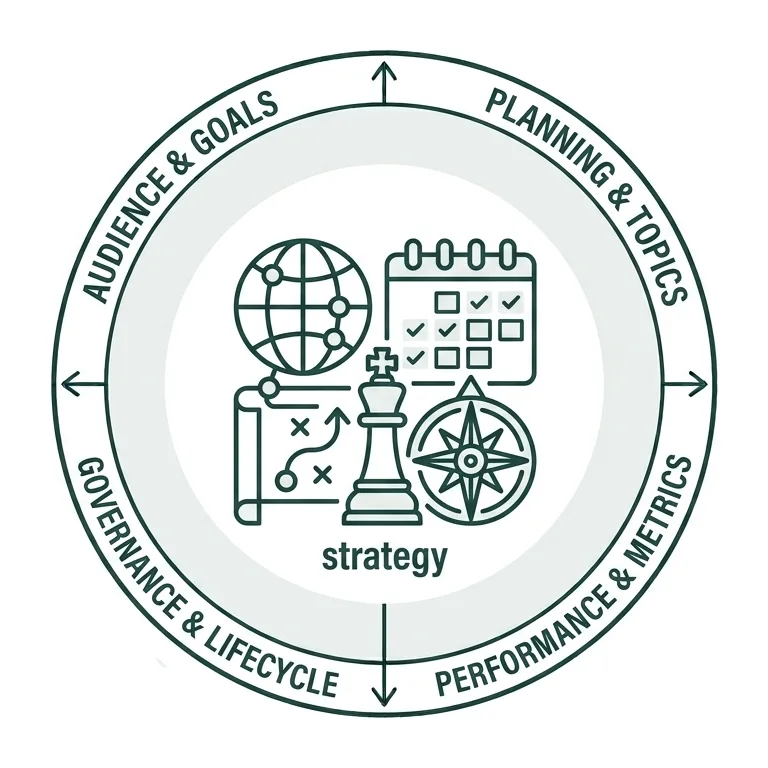
Content is (Still) King
Content is at the heart of every successful content strategy. Creating content that resonates with your audience requires more than simply writing well—it starts with understanding your marketing goals, your department’s strengths and opportunities, and, most importantly, the needs of your audience. Together, these insights help you develop a content strategy that delivers meaningful, relevant experiences for the people you’re trying to reach.
Below, we’ll explore several content strategy best practices that form the foundation of an effective framework for planning, creating, and managing web content.
The Digital Content Strategy Framework
In this recorded seminar hosted by UMC, you’ll learn how to establish meaningful goals for your website content, measure its performance using data-driven insights, and manage content strategically to better connect with your audience and deliver a positive user experience.
What is a Content Strategy?
A content strategy is a strategic approach to creating, managing, and distributing content. It involves planning and executing a roadmap for content creation, distribution, and optimization. A content strategy provides a framework to create valuable and purposeful content by focusing on the needs of the audience.
A digital content strategy is a high-level plan that guides the intentional creation and maintenance of information in a digital product as a way to achieve consistent experiences throughout the user journey and across all of its digital channels.
A content strategy will usually specify:
- The point of the content (organization objective or user need)
- Who will own, create, measure, and maintain the information
- How and where the content will best meet users’ needs (formats, channels, style, tone, word usage, etc.)
- How the content should be structured, tagged, and organized for findability and contextual visibility
- How the content will be published and fit in the overall experience
Our shared goal should be to ensure that all Wake Forest websites align with the university’s brand standards and use approved design and content styles to effectively communicate our message. By embracing a cohesive digital content strategy, we can create a consistent experience across wfu.edu that reinforces the university’s brand identity while providing users with a more intuitive, engaging, and enjoyable experience.
The Content Lifecycle
The content lifecycle refers to the stages content moves through from creation to retirement. It encompasses the processes of planning, developing, publishing, organizing, maintaining, repurposing, and eventually archiving or removing content.
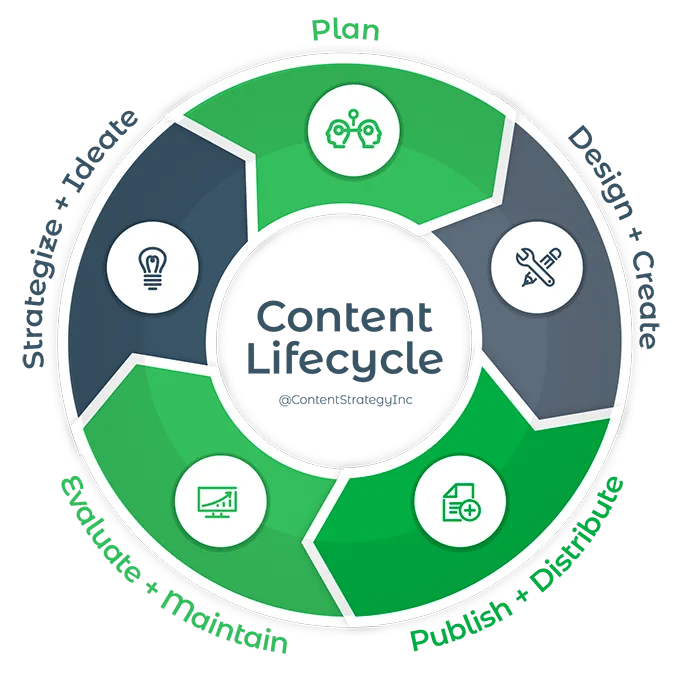
Managing website content can be challenging when balancing it alongside many other responsibilities. As a result, we often encounter common obstacles that make it difficult to effectively manage the content lifecycle.
Some of the most common challenges include:
- Coordinating content marketing efforts among multiple departments
- Ability to be agile when change is needed
- Consistency with messaging
- Lack of resources and proper training
- Not enough time
How to fix these issues:
- Implement a plan for when and how you’ll review your content
- Make sure all content owners/approvers are aware of the plan and contribute; Include those from other departments whenever necessary
- Set realistic goals for yourself: Start with what is achievable and work your way up from there
Setting Content Goals
Your digital content strategy should be guided by measurable goals and objectives. By consistently tracking and evaluating your progress, you can determine whether your content is achieving its intended outcomes and identify opportunities for improvement. More importantly, it helps answer a critical question: What role does your content play in accomplishing your department’s goals?
Here’s what you should be thinking about when setting content goals:
- Be familiar with your department’s goals
- Know your audience (and others who may be looking at your site)
- Make sure the content that speaks to your goals is clear and easy to find
Define your goals.
It’s important to understand both your users’ goals and your department’s goals. While these objectives sometimes overlap, they aren’t always the same. Identifying both is essential to creating content that meets user needs while supporting your strategic objectives.
External Goals (Them)
- Fill out a form
- Complete an application
- Sign up for an e-newsletter
- Register for an event
- Learn about a specific topic of interest
Internal Goals (You)
- Increase pageviews
- Improve visibility in search engines and GenAI tools (e.g., Google AI Overview, ChatGPT)
- Increase how much time a user spends engaging with content on your site
- Improve conversions
Identify the purpose of your content.
Every page on your site has a purpose. You need to understand what that is in order to create an effective strategy that will provide a positive user experience for your users.
To Educate or Inform
- When you want someone to learn more about a product or service you offer
- Content that keeps users moving through your site
- Examples: Majors offered, parking info, residence hall images
To Take Action
- Content you want users to interact with (conversions)
- May be the last page on your site the user engages with (completes a goal)
- Examples: Schedule a visit, sign up for an event, download a PDF
Measuring Performance
The most effective way to measure how your content is performing is by identifying KPIs, or Key Performance Indicators. A KPI is a measurable and quantifiable metric used to track progress towards a specific goal or objective. They help us identify strengths and weaknesses, make data-driven decisions, and optimize performance of our digital content.
Wake Forest website editors who have access to Siteimprove should take full advantage of the platform’s capabilities to measure and evaluate their site’s performance. The Analytics module provides valuable insights through features such as Event Tracking, Behavior Maps, and a variety of content performance metrics, helping editors better understand user engagement and make data-informed decisions.
Examples of KPIs
Measuring conversions and interactions
- Page visits (user journeys, funnels)
- Form completions
- Link clicks (on a webpage)
- Video engagement (watch time)
External traffic to your website (referrers)
- Social media posts that drive users to specific content on your website
- Clicks on links in an email to drive traffic to your website
- Search engine and GenAI traffic and visibility
Content Audit
Website content audits are an essential part of the content lifecycle. They help ensure your content remains accurate, relevant, and aligned with both your users’ needs and your department’s goals. By regularly evaluating your content, you can identify opportunities to improve the user experience while ensuring your website continues to support your strategic objectives.
Even if your marketing strategies haven’t changed, your users’ habits may have.
Before beginning a content audit, take two important steps:
- First, meet with your department’s content and marketing staff to review your goals and discuss how they may have evolved since your last audit.
- Second, gather feedback from the people who use your website most frequently to help inform your content decisions and ensure your site continues to meet their needs.
Here are a few different proven ways to do this:
- Talk to your target audience. If you have access to users who rely on your website, set up a time to have a conversation with them about how they use your website. Some questions you should consider asking are:
- What content are you looking for on sitename.wfu.edu?
- Do/did you have any frustrations while using the site?
- How do they find the content they were looking for?
- Do you have suggestions on what would make it a better experience for you?
- Online surveys can be beneficial if you ask the right questions. If your primary audience are users outside of the Wake Forest campus (e.g., prospective students, alumni), consider sending them a link to an online survey that would help you collect feedback on how they use your website.
- Compare the feedback you receive with your current goals and adjust accordingly. Communicate your findings with others in your department to make sure you understand what your content priorities are and that any changes are reflected in other marketing materials for continuity.
Your Digital Strategy Toolbox

Content
A well-defined web content strategy drives user experience, content visibility, and overall website performance.

Analytics
Analytics help you uncover insights, identify trends, and guide improvements for your website content strategy.

GenAI & SEO
How people discover information has changed—and continues to evolve. Here’s why that matters and how to approach it.

Accessibility
An effective website is designed not only for its intended audience, but to ensure everyone can access its content.
Online Presentations
Whether you’re interested in attending an upcoming digital strategy presentation or want to revisit a previous one, explore the topics we cover and resources we share.
Glossary of Terms
Digital strategy involves a lot of terminology that can feel overwhelming. We’re here to help clarify some of the most common terms and concepts you’ll encounter.
Want to Chat?
We’re here to support your digital strategy efforts. Reach out with questions or schedule a consultation with us to discuss your website strategy.