
Traffic Sources
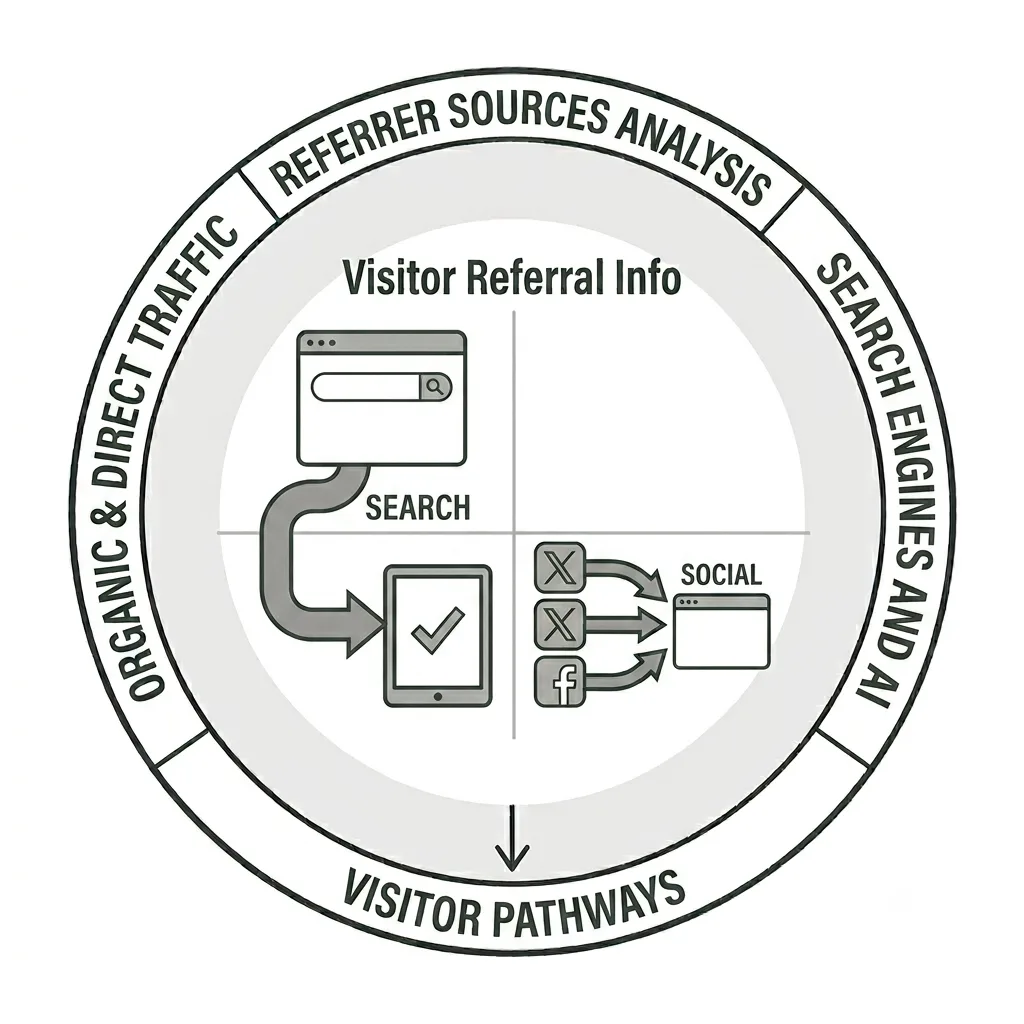
Understand Where Visitors Enter and Exit
Traffic Sources in Analytics help you understand how visitors arrive at your website. Siteimprove categorizes traffic based on referral information and the source that directed a visitor to your site, including AI tools, internal and external referrers, search engines, social media, and direct traffic.
Understanding these sources can provide valuable insight into how visitors discover your content and which channels are driving the most traffic.
Note: This tutorial provides an overview of the Traffic Sources feature in Siteimprove’s Analytics module and may not cover every available feature or capability.
Traffic Sources
In this tutorial, we’ll review the different types of traffic sources visitors use to find their way to your website and explore your content. We’ll also look at what each source can tell you about how users discover your site and why understanding these patterns can help you better evaluate content performance.
Types of Traffic Sources
Understanding how visitors arrive at your website is an important part of understanding how your content is discovered. A visitor may arrive through a link in an email, a social media post, a search engine result, or an AI-generated response. Knowing which channels are driving visitors to your site can help you develop a content strategy that supports the ways your audience is finding and engaging with your content, as well as increase overall conversions.
Let’s explore the different referral channels that can bring visitors to your website.
External Referring Domains and Pages
External referring domains and pages identify the websites and specific webpages visitors were viewing immediately before arriving on your site. These referrals occur when a visitor follows a link embedded in the content of another website.
For example, a visitor might click a link on a news article, partner organization’s website, blog, or another external resource and arrive at a page on your site. Because the link originated from another website—not from a search engine results page, email, or social media post—the referring website and page are recorded as the external source.
Analyzing external referring domains and pages can help you understand which organizations, publications, partners, and other websites are directing visitors to your content.
Direct Traffic
Direct traffic refers to visitors who arrive at your website without a recognizable referring source, such as a social media platform, email, or another website outside of wfu.edu. This may include visitors who type your URL directly into their browser, use a bookmark, or click a link from a source that does not pass referral information.
Direct traffic can indicate strong brand awareness and visitor familiarity with your website. If someone visits your site often, they may have it bookmarked or type in the URL directly into their search bar.
Search Engines
Search engine referral traffic comes from traditional search engine results pages, such as Google or Bing. When a visitor clicks a link in a search result and is directed to your website, that visit is classified as search engine referral traffic.
For many websites, search engines are one of the largest sources of traffic, making this data especially valuable for understanding how visitors discover your content.
Traffic from AI-powered tools is not included in this category, even though these tools are increasingly being used for search and discovery. We’ll explore AI-driven referral traffic in the next section.
AI
AI-powered tools—including generative AI assistants and answer engines—are increasingly becoming part of how people discover information online. These tools can surface content from websites and direct users to the source when they click links included in AI-generated responses.
Traffic from these tools represents a distinct and growing discovery channel that does not always fit neatly into traditional traffic source categories. As more users rely on AI to find information, understanding how AI-driven referrals contribute to website traffic can provide valuable insight into how effectively your content is being discovered, surfaced, and ultimately visited.
Social Media
Social referral traffic is traffic that arrives at your website from social media platforms such as Instagram, X, YouTube, LinkedIn, and others.
When you share content on your own social media channels—or when another account, such as Wake Forest University’s main social media accounts, shares content that links to your website—any visitor who clicks or taps that link and arrives on your site is counted as social referral traffic.
Your Siteimprove Toolbox

Quality Assurance
Discover the steps you can take to create a more effective, engaging, and user-friendly website experience for everyone.

Analytics
A successful content strategy starts with understanding how your website is performing and what your audience is looking for.

Accessibility
Accessibility isn’t just about what happens behind the curtain—it’s about the experience everyone has in front of it.

SEO & Search
Understanding how visitors find your website and what they want is an essential step in developing an effective content strategy.
Online Presentations
Whether you’re planning to attend an upcoming digital strategy presentation or want to revisit a previous session, explore the topics we cover and resources we share.
Digital Strategy
A strong digital strategy serves as the foundation for your website and every aspect of your digital marketing and communications. Here’s what you need to know.
Want to Chat?
We’re here to support your digital strategy efforts. Reach out with questions or schedule a consultation to discuss your website strategy and explore opportunities for improvement.